








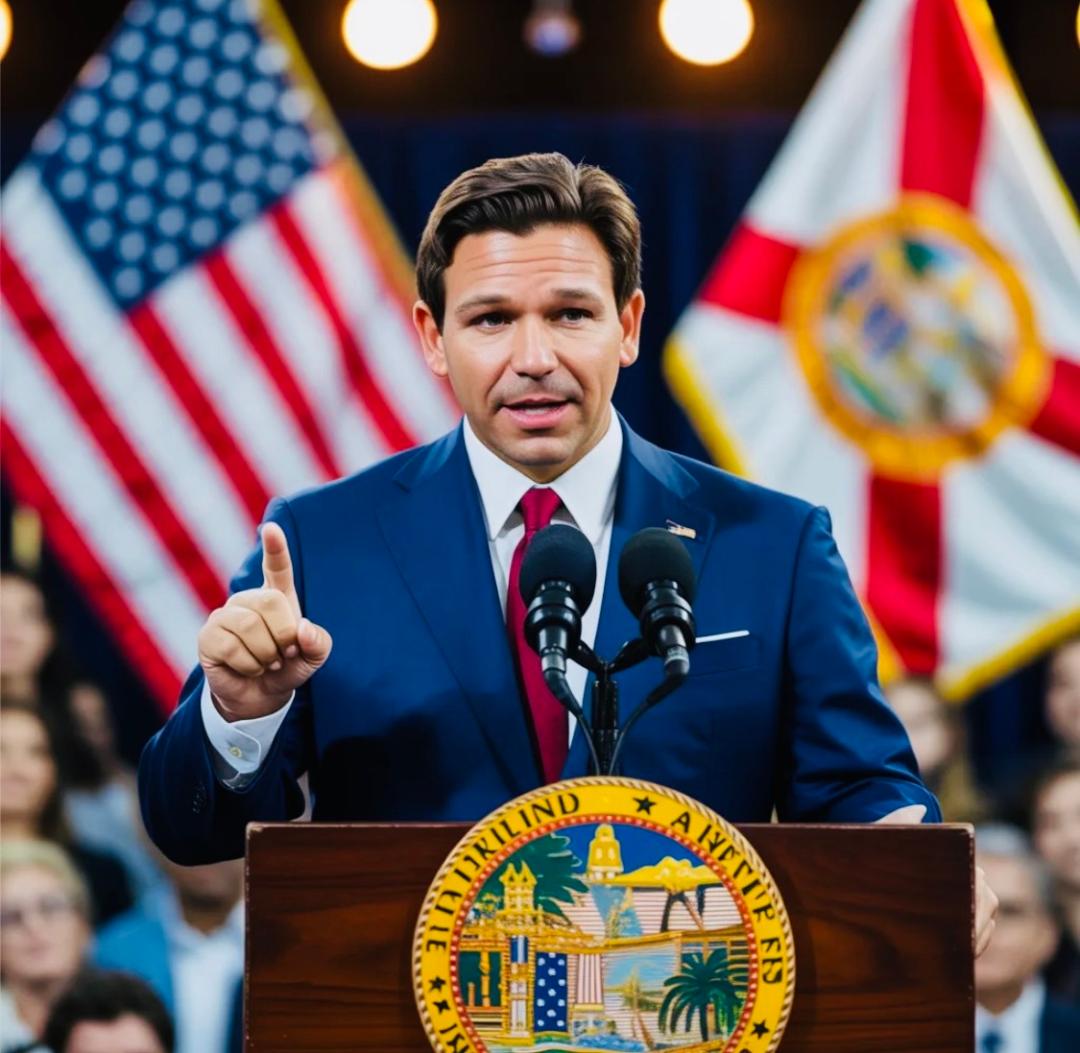
Gov. Ron DeSantis has intensified his push for Florida’s “Artificial Intelligence Bill of Rights,” renewing calls for the Legislature to pass the measure while announcing a new state initiative to examine artificial intelligence’s effects on children and families.
In a post on X, DeSantis stated that AI “should enhance our lives, not control our lives,” and stressed the need for stronger safeguards against potential risks from the fast-evolving technology. He directed state agencies to collaborate with the Future of Life Institute and researchers specializing in AI-human interactions to assess impacts on children’s mental health and development.
The initiative will develop a training curriculum for crisis counselors addressing AI-related mental health issues and create a statewide reporting form for AI-related harms. “The AI Bill of Rights defends consumers, medical patients, and families in Florida from the potential harms of artificial intelligence applications,” DeSantis wrote. “It is especially important that we protect the most vulnerable among us: our children.”
The announcement follows the Florida Senate’s passage of SB 482 (CS/SB 482), sponsored by Sen. Tom Leek, R-Ormond Beach, on March 4 by a 35-2 vote. The bill, now in the House, would establish an “Artificial Intelligence Bill of Rights” with provisions including:
• Requiring clear disclosures when users interact with AI systems, programs, or chatbots rather than humans.
• Mandating parental or guardian consent for minors to create or maintain accounts on “companion chatbot” platforms, which simulate ongoing emotional or relational interactions.
• Requiring periodic notifications from bot operators reminding users the system is AI-generated and not human.
• Prohibiting unauthorized use of a person’s name, image, likeness, or personal data in generative AI outputs.
• Imposing restrictions on government contracts with certain AI entities, including those linked to “foreign countries of concern.”
The legislation also includes education-related safeguards, such as parental opt-out rights for children’s use of AI in schools and limits on unsupervised AI access in elementary settings.
DeSantis noted that while the Senate approved the bill, it has stalled in the Florida House, where Speaker Daniel Perez and leadership have indicated reluctance to advance it, preferring federal action on AI regulation over state-level measures. The regular legislative session ends March 13, 2026, leaving limited time for House consideration.
If passed by both chambers and signed into law, the changes would take effect July 1, 2026. The governor’s renewed emphasis highlights his long-standing concerns about AI risks, particularly to minors, amid broader national debates on technology oversight.