







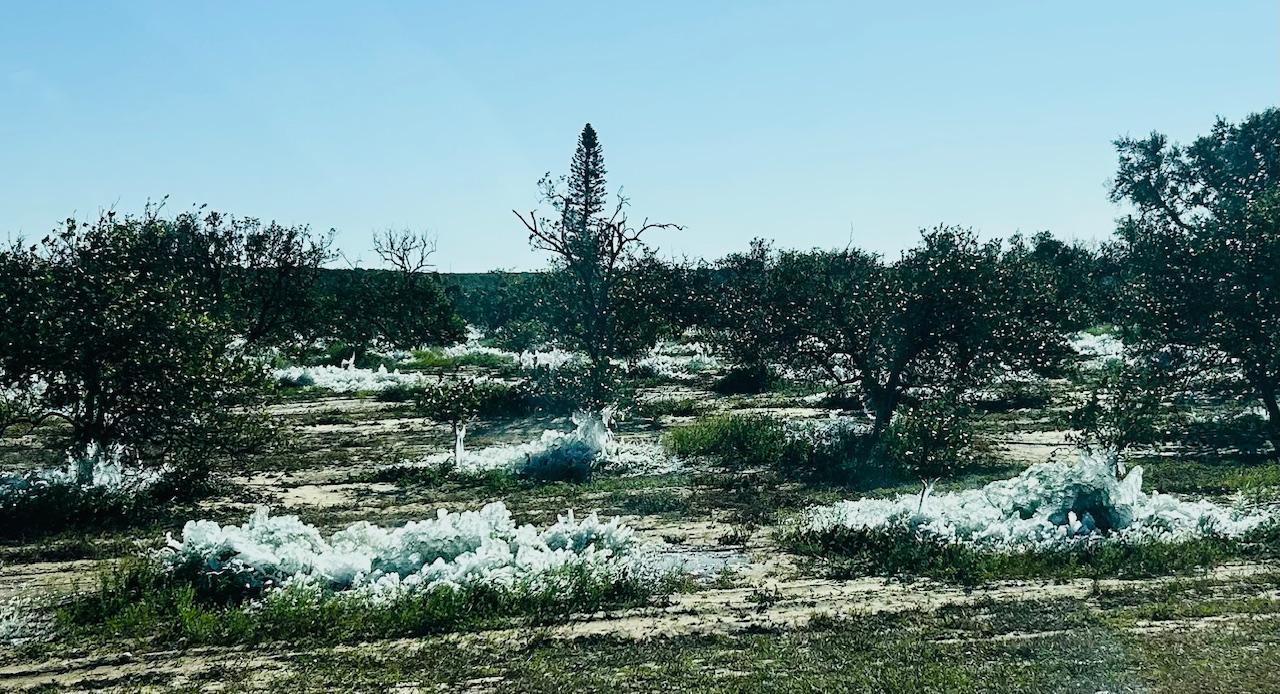
U.S. Agriculture Secretary Brooke Rollins has signed a disaster declaration Wednesday for Florida counties ravaged by a late-winter freeze, unlocking federal aid for farmers facing an estimated $3.1 billion in losses.
The move came after a bipartisan push from Florida’s congressional delegation, led by Rep. Kat Cammack, who joined Rollins for the signing. The declaration addresses impacts from the historic cold snap in late January and early February, which devastated key crops including sugarcane, citrus and strawberries.
“Preliminary estimates from the Florida Department of Agriculture and Consumer Services show more than $3.1 billion in agricultural losses statewide,” according to Cammack’s office. The delegation had urged the U.S. Department of Agriculture in a letter to deploy disaster assistance swiftly and work with Congress to ensure adequate funding for recovery.
The freeze inflicted major damage across multiple commodities, with sugarcane topping the list at $1.15 billion in losses, followed by citrus at $674 million and strawberries at $307 million, state data showed. Other hard-hit sectors included sweet corn at $255 million and greenhouse and nursery operations at $240 million.
The Full breakdown of estimated losses, per the Florida Department of Agriculture and Consumer Services looks like this:
Sugarcane: $1,152,122,146
Citrus: $674,600,336
Strawberries: $306,965,897
Sweet corn: $255,363,251
Greenhouse and nursery: $240,000,000
Tomatoes: $164,273,849
Bell peppers: $108,380,389
Potatoes: $79,065,000
Blueberries: $78,512,400
Watermelons: $56,437,343
Squash: $24,522,275
Cabbage: $21,800,280
Cammack, who represents Florida’s 3rd District, spearheaded the effort alongside all 29 members of the state’s delegation. The group stressed the urgency of relief for producers in a state where agriculture is a cornerstone of the economy.
The USDA’s action opens access to emergency loans, grants and other programs to help farmers rebuild. Florida officials have described the freeze as one of the most severe in recent history, affecting wide swaths of the state’s central and southern growing regions.