



A controversial bill creating a new statewide counterintelligence and counterterrorism unit within the Florida Department of Law Enforcement (FDLE) advanced Tuesday despite bipartisan concerns over potential threats to free speech and risks of abuse.
House Bill 945, sponsored by Rep. Danny Alvarez (R-Riverview), passed the House Budget Committee on a 20-8 vote. It now heads to the House State Affairs Committee, its final House committee stop, before possible floor consideration. The 2026 legislative session ends March 13.
The legislation directs FDLE to establish the unit to detect, identify, neutralize, and exploit threats from foreign adversaries, international and domestic terrorists, insider threats, corporate threats, and “adversary intelligence entities.” The bill defines an “adversary intelligence entity” to include any person whose demonstrated actions, views, or opinions are deemed a threat to or inimical to the interests of Florida or the United States.
The unit would analyze “patterns of life” to identify threats and employ “all counterintelligence and counterterrorism tradecraft necessary,” including executing arrests or compelling responses. FDLE must form an initial 10-person leadership team by July 1, 2027, eventually expanding to seven regional teams.
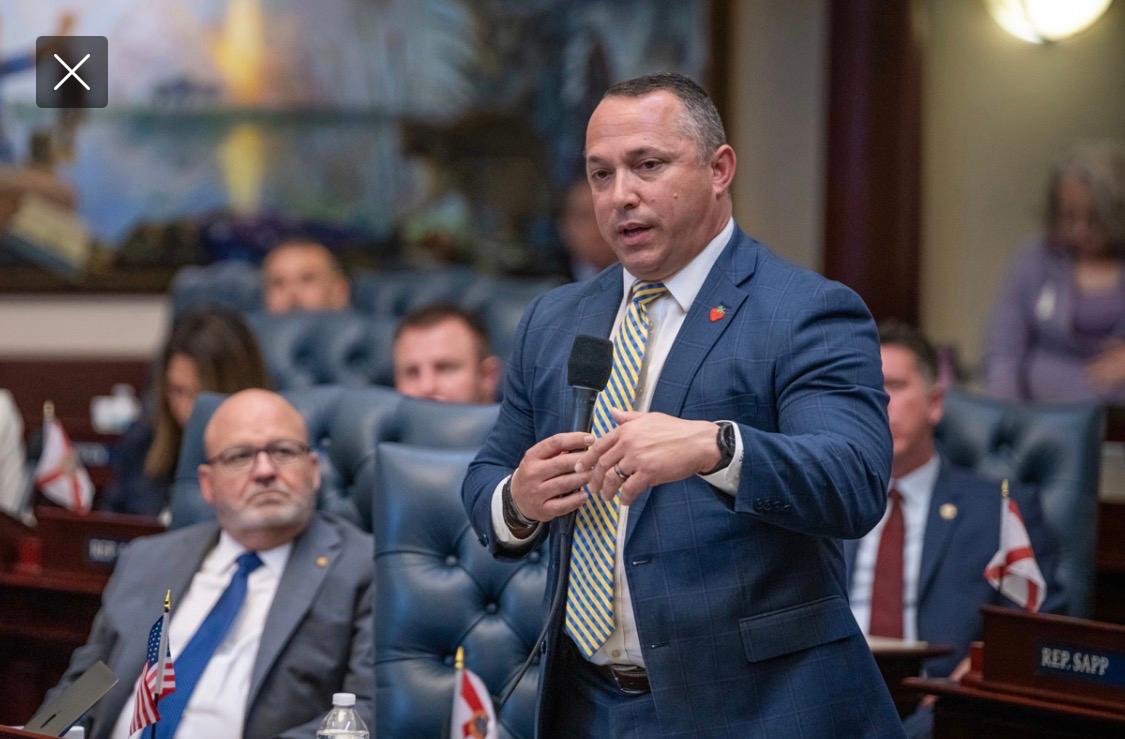
Alvarez, who drafted the measure with FDLE input, told the committee an amendment is forthcoming to address recent free speech concerns. “We are very, very aware of the questions regarding the First Amendment,” he said. “But just understand, this is going after terrorists, nation-state bad actors, not political speech.”
The assurance did not fully ease opposition. Rep. Michele Rayner (D-St. Petersburg) invoked the FBI’s COINTELPRO program, which targeted civil rights and activist groups in the 1960s and 1970s, citing a lack of guardrails for judicial oversight or warrant requirements. She referenced a Largo couple visited by armed state investigators last year after sending a critical postcard to a state official. “Having a lived experience as a Black woman in America who has been targeted by law enforcement because of things I’ve said… I don’t know that there’s any iteration of this bill that I can support,” Rayner said. “Because, quite frankly, that means that any of us could be a target.”
Republican Rep. Alex Andrade (R-Pensacola) also raised alarms about oversight, noting FDLE’s director is appointed by the governor and confirmed by the Cabinet. He cited past alleged abuses by an unelected Cabinet member—referring to Attorney General James Uthmeier—and said he might support a “cleaned up” version to prevent misuse.
Alvarez countered that existing state constitutional protections provide sufficient safeguards. He argued the unit fills a gap, as federal reliance leaves Florida vulnerable, and borders no longer adequately protect the state. The proposal mirrors post-9/11 units like New York’s.
The bill, filed late 2025, had advanced with minimal initial scrutiny but drew scrutiny after reports highlighted its broad language and potential for surveilling or targeting individuals based on political views or dissent. A companion Senate bill, SB 1712, is sponsored by Sen. Jonathan Martin (R-Fort Myers).